Sunday, September 03, 2006

We're waiting...

for tomatoes....Toss them over the fence NOW.

There's nothing happier than a duck with a tomato.

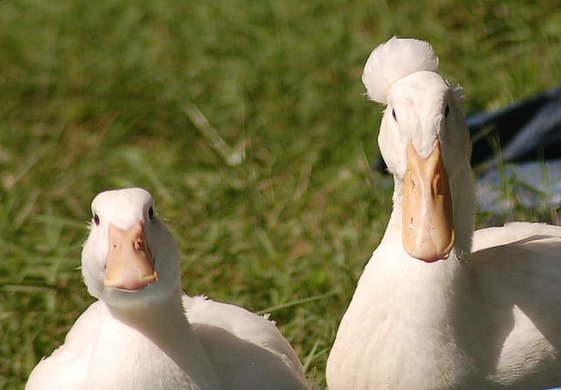
Both ducks are Pekins, but the one on the right might have a bit of Crested Pekin in his family tree. Note the puff of feathers - he looks like he has a cotton ball stuck to the side of his head. Guess that makes him an odd duck.

Groan...

Wednesday, August 30, 2006

Happy little seedlings

They were happy and healthy until the blister beetles came along and chowed down on them. Then the ducks chowed down on the blister beetles...and anything else that looked yummy. Just another challenge in the life of a gardener.

Wednesday, August 23, 2006


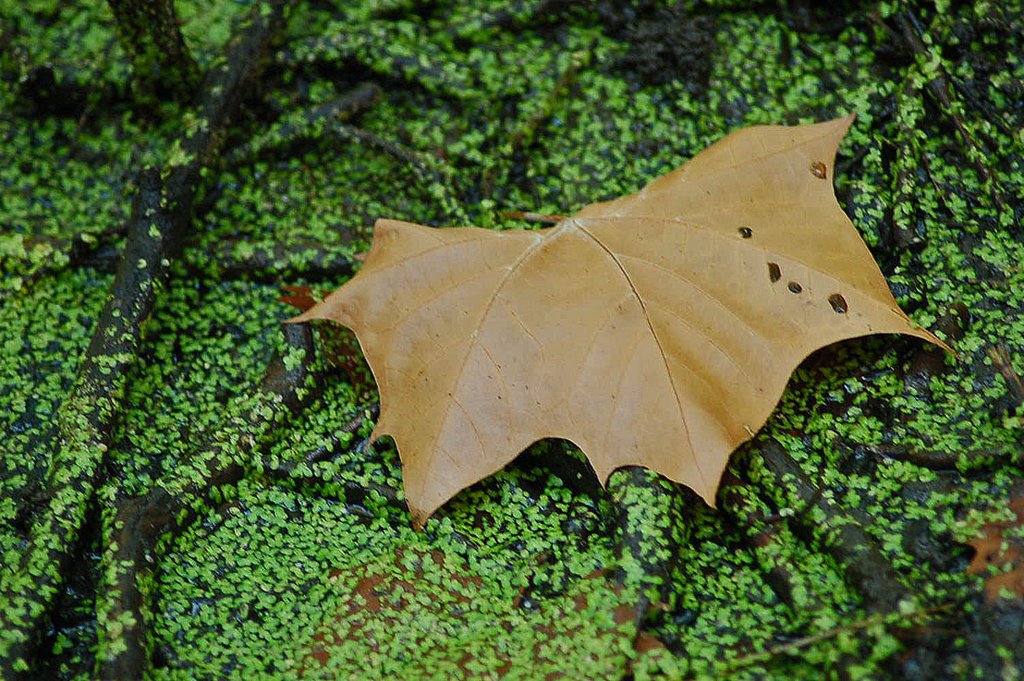
There's an old pond near the house. I took this photo earlier this summer when the first flush of leaves fell from the trees in response to the drought. At the time, the pond's surface and the treetops were the only green in that part of the pasture. The pond has since dried up, and the leaves in the surrounding trees are yellowing from thirst.

Wednesday, August 16, 2006

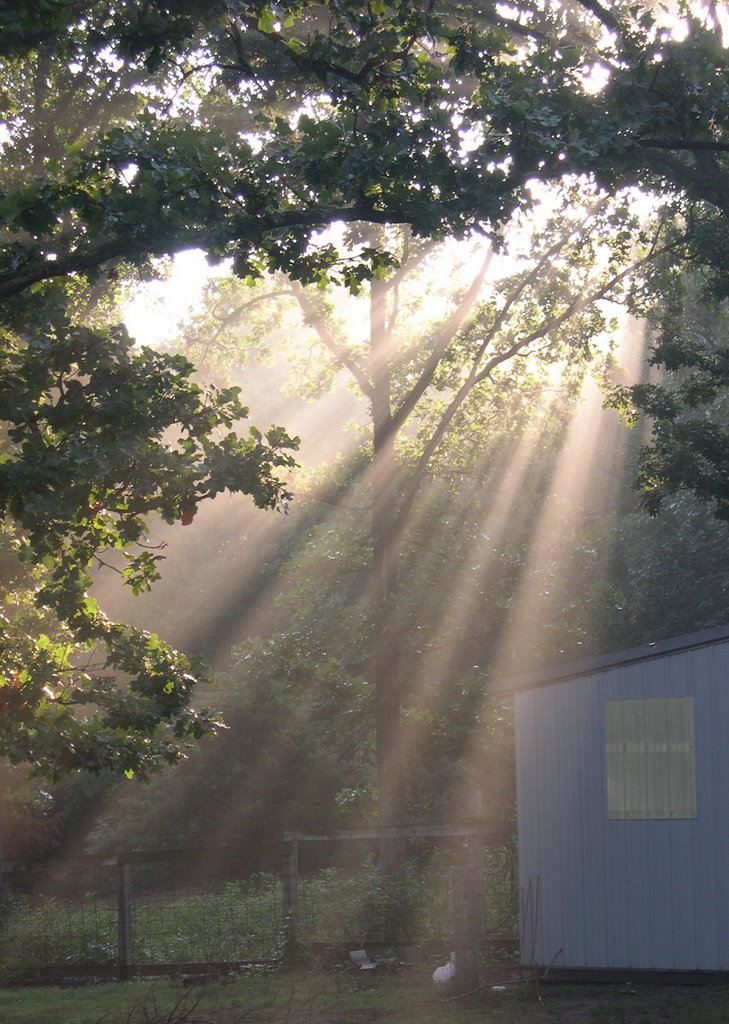
Sunbeams


The morning view from my back porch.

Tuesday, August 15, 2006

Hummingbird art?

I've been playing with the photo editing software again. Fun! Posted by Picasa

Saturday, July 29, 2006

Hummingbirds!


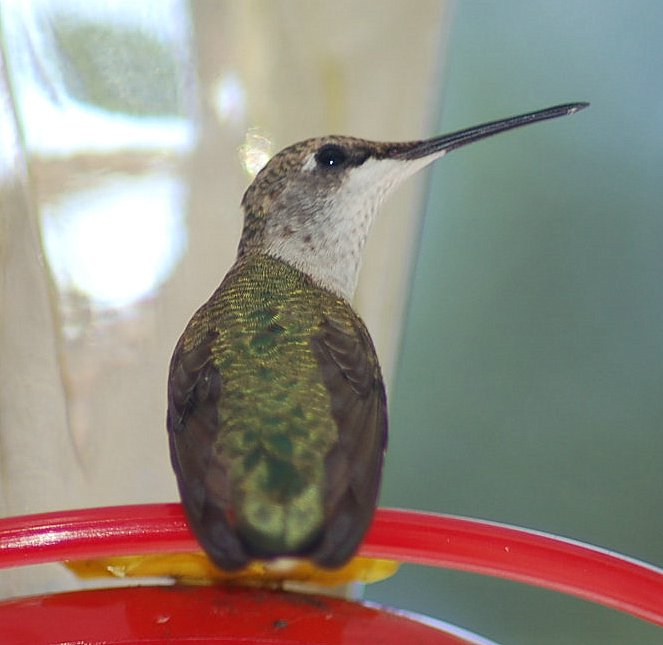
Last July, I spotted a hummingbird sipping nectar from flowers on the terrace garden, so I bought a feeder on my next trip to town. In time, I could identify five different hummingbirds that regularly visited the feeder. Hummingbirds aren't as thick as ticks here, but they're common enough. My neighbor's feeder would be empty within an hour or two of refilling. We just got the overflow.

This summer, the original five returned with friends and family. They buzz through, buzz one another, bicker, chatter, and occasionally three or four will actually feed peacefully from their separate perches on a single feeder. They flit from branch to branch, and contrary to conventional 'wisdom', they do sit still now and then. They perch on the branch tips of the oaks, on the wrought iron plant hanger, and on the feeders. This one posed quite nicely, don't you think?


And again, landing on the perch for a snack a while later.


Pretty back feathers.


And a speckled throat.

Thursday, July 27, 2006

The reaper

My new favorite tool is a European style scythe from Scythe Supply in Maine. I've been interested in various archaic crafts for much of my life, and in the simple tools of farm and home life.

I remember my father using a scythe for trimming tall grass when I was a child, but his was an unwieldy metal tool without grace or character. I asked him about it recently, and he said he hadn't used it in years. His lower back hurt badly after each use.

I'm told by those who seem to know about such things that American scythes have earned a bad reputation because of mass production. Factories could produce more, faster, and cheaper, and of course they were designed to accommodate the production process and not each individual. And thus were lost the finer points that make a finely crafted tool a pleasure to use.

After much thought and investigation, I chose a European style scythe with a hand-made snath (handle). I followed the guidelines for proper fit and provided my measurements from hip joint to floor and from elbow to the tip of my outstretched middle finger (cubit). When it arrived, I carefully waterproofed the snath with a mixture of linseed oil and turpentine. I clamped on the blade, and took the scythe to the tall stand of grass and blackberries near the larger of my garden patches. Working in short sessions each day, I practiced my stance and swing, and gradually began to make sense of the instructions I'd read in various articles. I cut a respectable area and let the hay dry in the heat. I raked it into windrows, turned the windrows, and finally deemed it finished. I hauled four heaping loads in the old dump cart to the rabbit stall in the barn. The stack filled a corner, six feet tall.

It's good hay, or at least the rabbits think so. And it makes good use of the best corner of what used to be a pasture and now is the fringe area along my young orchard and the gardens. I could keep that area trimmed with the lawn mower, but the clippings aren't so nice as this long-fibered hay. And then there's the noise and the exhaust from the mower engine to consider. There's a certain peace to be found in the rhythmic motion, the swish of the blade through the grass, and the sounds of the countryside. It's not a bad trade-off, and there's always the lawnmower when I'm in the mood to just get the job done in a hurry. Posted by Picasa

Tuesday, July 25, 2006

Eeeek...people!


We seldom see any of the whitetail deer that live here. When we do, it's usually at a distance. With three dogs at my heels, it's unlikely I'll be able to slip up close enough for a stunning photo. What I usually see is the white flag of their tails as they leap into the safety of heavy underbrush, followed by the sound of them crashing through said underbrush. A few days ago, I was lucky enough to be downwind and standing behind a tree when I noticed this doe approaching the fence. But alas, she spotted me. She paused only a moment, sniffing the wind, then gave me a glimpse of that familiar white flag as she ran away.

Monday, July 24, 2006

Wild plums

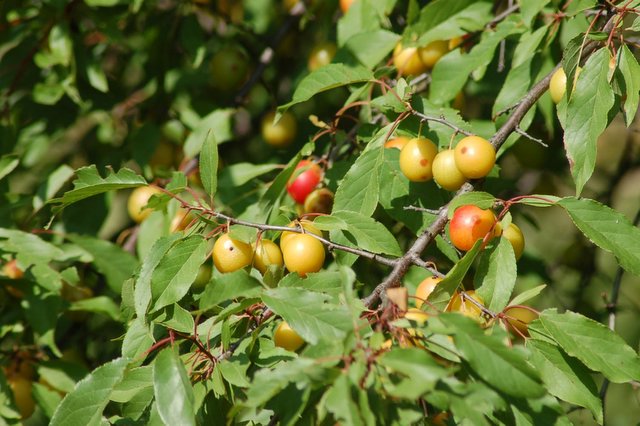
Before the heat wave, the wild plum crop appeared promising. In the last week, most of the fruit have dropped off. Sigh. I was so looking forward to adding wild plum jelly to the pantry shelves. Posted by Picasa

Wednesday, July 19, 2006

Heat wave


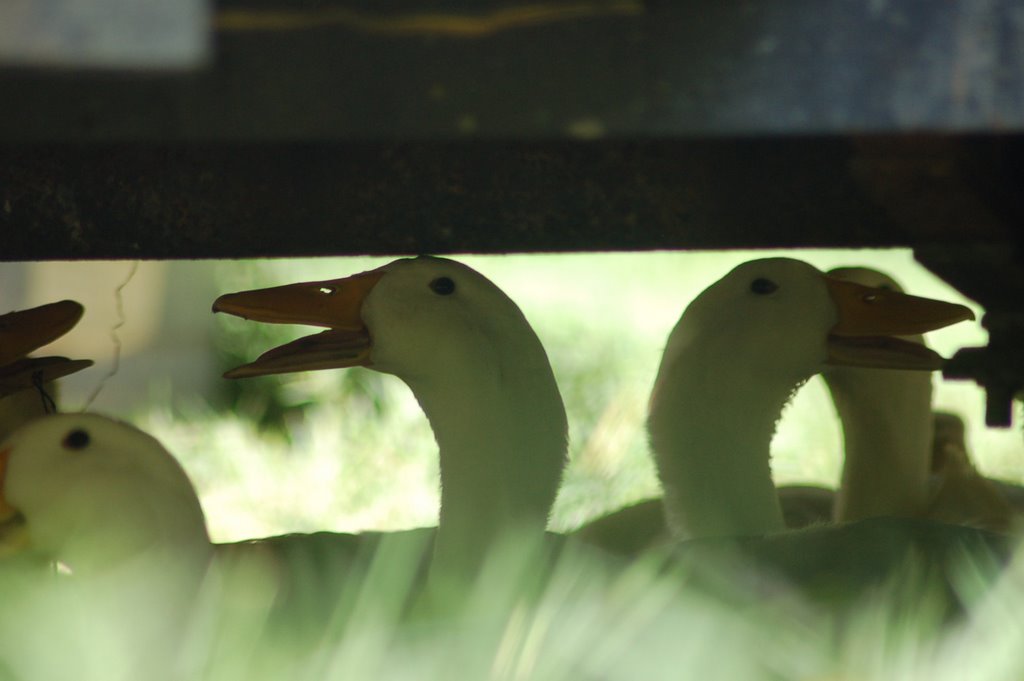
It's 103 degrees Fahrenheit in the shade here. I do not even want to know the heat index. The ducks have retreated to the shade under the trailer, which already was in the shade of a pecan grove. Notice the panting...notice that you can see right through the nostrils of one duck. I never noticed that before.

Sunday, July 16, 2006

Jewelry for geese?

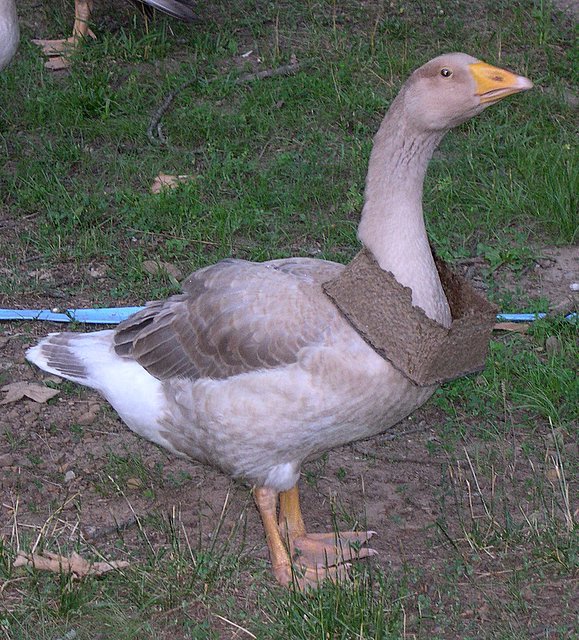
I must be more careful what I toss onto the compost pile. The poultry dig through for snacks there . . . and apparently neckwear. I found this goose sporting an old peat pot one afternoon last week. She (he?) didn't seem to mind. She grazed a while, napped, had a swim in the big water tub. Eventually it tumbled off while she was snacking on clover. Posted by Picasa

Saturday, July 15, 2006

Color in the garden

I've never grown such lush, happy eggplants before. The huge leaves concerned me at first because I feared I'd been too heavy-handed with the compost this spring and would have all leaves and no fruit. Not to worry. They're setting fruit now, and still the plants grow and grow and grow. I planted two varieties, Apple Green and Ichting Long, I think. Unfortunately, the goslings 'helped' me weed the garden one day and took great delight in plucking most of the markers from the ground. Fortunately, they found the markers more interesting than the plants. Posted by Picasa

Thursday, July 13, 2006

Wild cherries

If I were 20 feet taller, I could harvest this thick crop of wild cherries. I picked a modest amount from the branches I could reach, but they grow much thicker in the sunny treetops. I've also been picking wild blackberries and the fully ripened deep purple gooseberries. The ripe gooseberries are quite tasty, much better than the green stage that's more commonly used in this country.
Wild berries are small, though. It probably takes me three or four times longer to pick enough for a batch of jam as it would in a cultivated garden of domestic fruit. But ah, the flavors!  Posted by Picasa

Monday, July 10, 2006

English roses

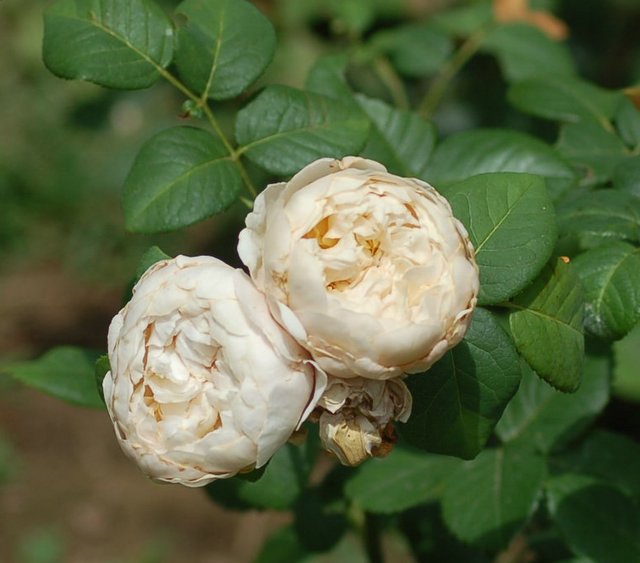
'Eglantine', a David Austin variety of English-style roses. My daughter took this photo in my new flower & herb garden next to the house. This garden is rather sparse now, just half-planted, and with only a couple mature plants. Thus, these blossoms stand out particularly well. The fragrance is heavenly, too. Posted by Picasa

Thursday, June 22, 2006

Summer flowers

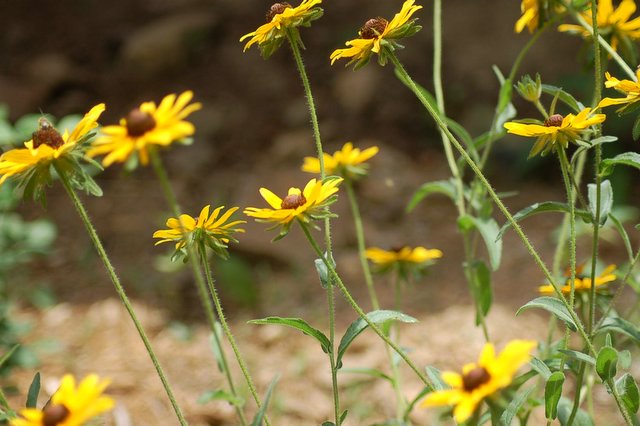
Months ago I spared a weed that I thought might be something more. It spread at the base and grew into this lovely patch of brown-eyed Susans. Last weekend my older daughter snapped these photos.
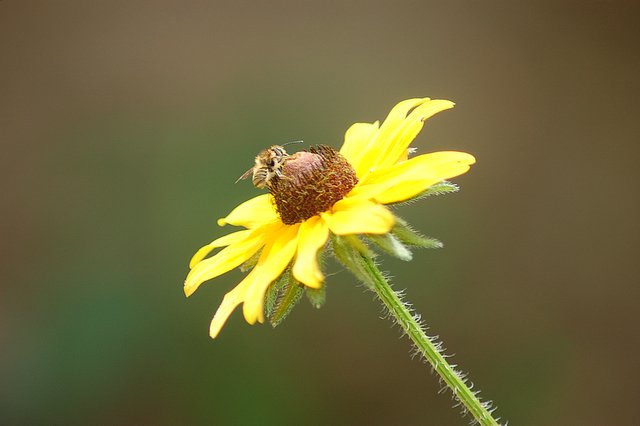
A closer look...busy, busy bee.

Wednesday, June 21, 2006

Solstice visitors

Two peahens showed up at the farm today, though they may have been lurking in the woods for a while. We've been hearing odd noises....

'Congratulations, you have peahens!' said the guy next door. I'm less than thrilled. They're pretty, but I'm not enamored of those special peafowl shrieks. None of the neighbors claim them, and no one has a clue where they belong. The geese are certain they don't belong here. There has been much squawking and flapping of wings. The dogs have kept the peace by flushing the peahens into the trees every time a disturbance erupts. Posted by Picasa
This close-up was the best I could manage to show the feathered topknot. It's not easy getting a nervous peahen to pose for the camera. Posted by Picasa

Sunday, June 18, 2006

Bath time

The geese took over the water tub in the cow stall and created a mud slick. So I moved the tub to the yard. Now they wander over several times a day for a swim. Two mostly grown American Buff geese will fit in the tub at a time, leaving just enough space for two more to dunk their heads. Thus far there have been no battles over whose turn it is. They're docile and sweet, quite unlike the geese of my previous experiences. They do make exceptions for pushy roosters and will yank a feather right out of any that bother them. Posted by Picasa

Wednesday, May 24, 2006

Today's lesson

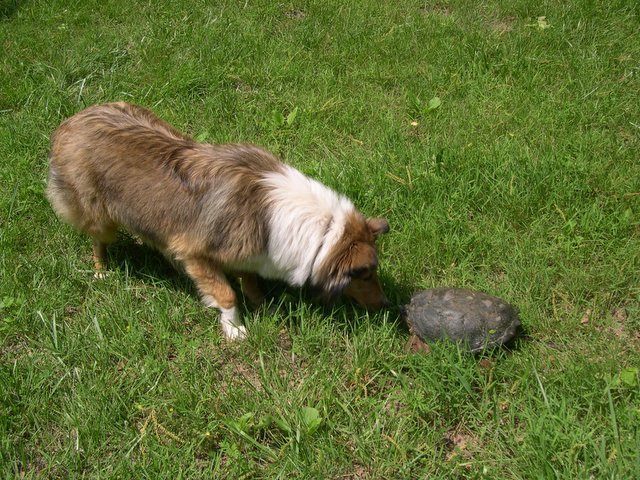
Today Bebe encountered her first snapping turtle. I spotted this one crossing the grass near the kitchen garden and hurried inside for the camera, hoping the dogs wouldn't notice it until I returned. No such luck. Blue and Ralphie, both older and turtle-wise, observed from a safe distance while Bebe investigated. She barked. She pounced. She sniffed, and barked some more. She moved in close for a really good look, nose-to-nose and SNAP! That turtle was fast. Bebe was faster. And I, a mere human, with aging reflexes, missed that photo opportunity. My trigger finger was just too slow. Posted by Picasa
Damp creek mud filled the rough crevices of its shell, and bits of algae and moss clung here and there. I wonder how many times I've passed this fellow and thought just another stone in the creek bed. Posted by Picasa
Interesting eyes on this rugged, gnarled face. Posted by Picasa

Monday, May 22, 2006

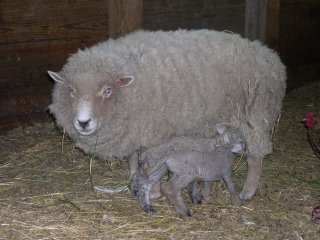
Twin lambs

This morning as I settled into position for the morning milking, I heard new voices complaining in the stall across the barn aisle. Hmm. Interesting. My sleep brain hadn't yet grasped the significance when a scuffle began. The disturbance upset the cow, and that's sufficient cause for me to set the milk bucket aside and deal most harshly with the culprits. Usually.

This morning there was good reason for the disruption. When multiple species live together, such as they do in our barn and pastures, the dynamics can become interesting. Relationships are formed, and there are cultural clashes as one group's instincts class with another's. Such was the case in the barn today. Tinkerbell, the ewe, stood in the corner with the firstborn twin, who was frustrated with his wobbly legs and complaining vigorously. Nearby, Katrinka, our goat herd queen, stood guard over the second twin lamb. Katrinka hasn't had kids in several years, but each new birth in our mixed herd revives her mothering instincts. She's become the herd midwife, so to speak. She's present for the birth, helps clean up the babies, and helps deal with the afterbirth. She might even murmur encouragement throughout the long labor for all I know. Or those soft baas might be something less complimentary. Who knows? She's also a formidable protector, much to the dismay of the three farmcollies, who'd really like to lick the babies and stand guard over them, too. And the rest of the small herd? They hovered close, creating a 'safe zone' that no dog shall pass.

Most mothers know, however, that there comes a point when the well-meaning assistance and hovering become too much. So I shooed the rest of the herd into the pasture and shut the barn door. The dogs were ordered away as well, and I returned to my morning chores. Later in the day, when the usual newborn tasks had been attended to and the twins' bellies were full, I weighed them. Much to my surprise, their combined weight was 10 pounds. I expected less because neither looks as big as a half-grown kitten. Babydoll Southdown lambs are tiny when born, with ears that look too big for their gangly, fuzzy bodies. Their soft wool is usually coated with lanolin, so they look messy for the first week or so. These two have a bit of dirt rubbed into the lanolin as well since their mother chose to give birth in the dust near the pasture door instead of the deep straw further inside.
Sunday, May 21, 2006

Indian Paintbrush

Just down the road there's a patch of prairie, blooming with native flowers. It's owned by a friendly neighbor who doesn't mind me wandering about, snapping photos. About a week ago, the Indian Paintbrush hit it's prime, and its bright splashes of color dominated the field. This week, the yellows and blues are gradually taking over.

Friday, May 19, 2006

Out for a stroll

The goslings have outgrown their day pen, so today I let them run free in the yard. They particularly like the shady leaf litter behind the henhouse.

Tuesday, May 02, 2006

Not enough roses

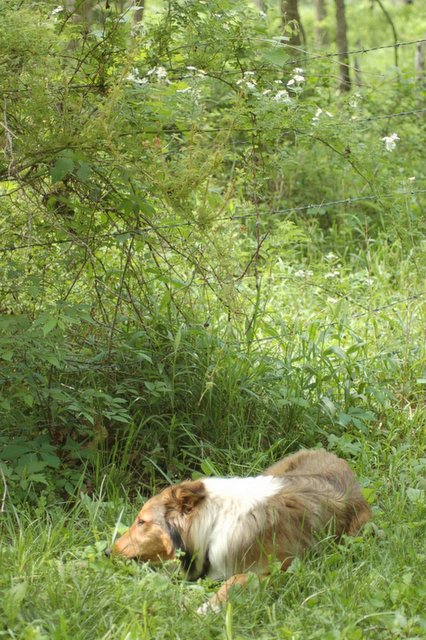
The sweet, heavy fragrance of the early wild rose blossoms can't cover the nasty odor from Bebe's most recent skunk encounter. She tried rubbing it off in the grass, rolling in the straw, and rolling in the creek. Late yesterday afternoon she finally settled down to pout under this creekside patch of wild roses.

Monday, May 01, 2006

Spring peeper!

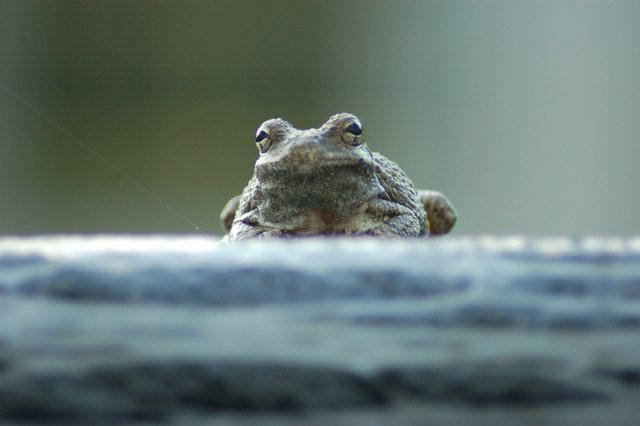
Technically it's a gray treefrog, Missouri's most common species of treefrog. I tracked it by sound to this perch on the rip of our above-ground pool. Since it sounded more like "a birdlike, musical trill" than "a buzzer", I concluded, with the help of the Missouri Department of Conservation's website that my visitor is an eastern gray treefrog (Hyla Versicolor) and not a Cope's gray treefrog (Hyla Chrysoscelis). Judging from the evening chorus, the swampy pond just downhill from the house is frequented by hundreds of eastern gray treefrogs.

Sunday, April 30, 2006

They're back!

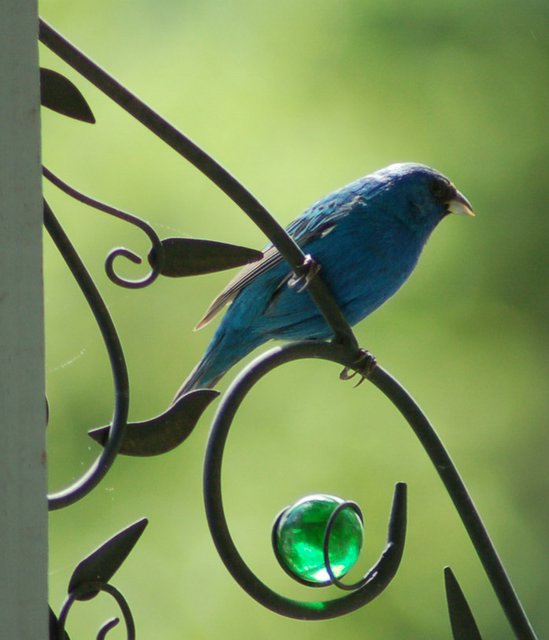
The hummingbirds and indigo buntings have returned to my terrace garden. The buntings perch on the end of a gutter to survey the area. Next stop is this bit of decorative ironwork. When they're sure it's safe, they proceed to the bird feeder for a meal. The hummingbirds aren't dining at our place yet because I haven't located all the parts to their feeder.

Wednesday, April 26, 2006

Bad weed!

Very bad weed! Hundreds of these young burdock plants have appeared in the pasture, the gardens, in full sun and shade. Sure, they look innocent now. And yes, I know the mature roots are edible and even useful in therapeutic preparations. (More about that another day...)

It's the burrs that cause the problems. They're often called cockleburrs, though that's not correct. The cockleburr comes from a different plant, though the burrs are about the same size and cause as much trouble. Last fall I spent hours untangling the burdock variety of burr trouble from the dogs' coats. The goats' beards turned into tangled, matted messes in one afternoon of grazing, so I took the easy way out and cut their beards off. The sheep? Well...that was just sad...they'd have been embarrassed if they'd been allowed mirrors.

Monday, April 17, 2006

The babysitter

The goslings took their first swim this afternoon while I cleaned the brooder. Ralphie, our English Shepherd, stayed close and guarded them from the gang of bully roosters. He wouldn't let the other dogs come near either.

Wednesday, April 12, 2006

Peeps!

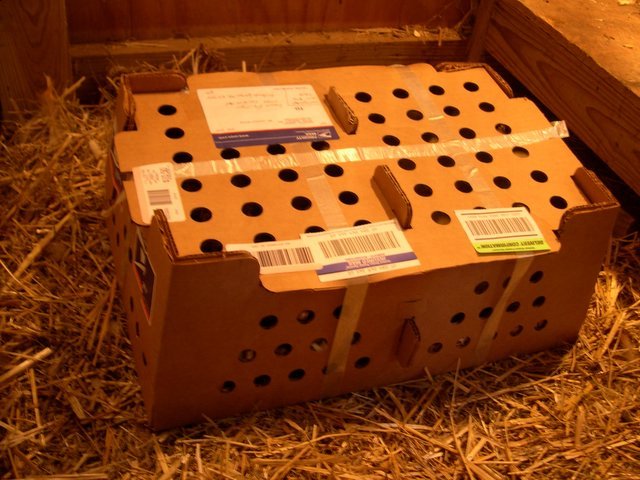
This morning I got the call as I was heading to the barn to milk the cow. My peeps had arrived at the local post office on the morning truck.

The 22 turkey poults and 8 goslings made the trip from the hatchery well and are settling in nicely. The turkeys are Kardosh Bronzes, a strain of standard bronze turkeys. Kardosh Bronzes are large turkeys, not as large as the broad-breasted types grown commercially for supermarket sales, but a lot sturdier. These will able to reproduce naturally. (Commercial broad-breasted types must be artificially inseminated because selective breeding for the 'optimum' breast has created birds that aren't capable of natural insemination.) The Kardosh Bronzes have longer legs and a sturdy, proportionate bone structure. The color is similar to that of wild turkeys, beautiful, with a metallic glimmer to the feathers when the light strikes them at the proper angle. A few years ago, I had the opportunity to talk with Frank Reese Jr., a long-time breeder of Kardosh Bronzes and friend of Norm Kardosh, who developed the strain. One of Frank's huge young toms followed us through the poultry yards, puffing and displaying. The late morning light reflecting off his feathers reminded me of the sheen of a new penny.

The goslings are American Buffs, a breed listed as critically rare by the American Livestock Breeds Conservancy. Buffs are generally calm and docile, I'm told. We'll see. My previous experiences with geese could not be described in those terms. I'm willing to play nice if they will.
The Kardosh Bronze turkey poults can't stand still for more than a second. They're healthy, alert, and busily exploring every inch of the old hog waterer we recycled into a brooder pen a few years ago.
These American Buff goslings will spend their first week in the hose-out brooder. My genius husband built this brooder from the shell of our old dishwasher. It's the easiest to clean and sanitize - a big plus. Waterfowl babies are MESSY! It's also the most heat efficient of our brooders. Posted by Picasa