This morning as I settled into position for the morning milking, I heard new voices complaining in the stall across the barn aisle. Hmm. Interesting. My sleep brain hadn't yet grasped the significance when a scuffle began. The disturbance upset the cow, and that's sufficient cause for me to set the milk bucket aside and deal most harshly with the culprits. Usually.
This morning there was good reason for the disruption. When multiple species live together, such as they do in our barn and pastures, the dynamics can become interesting. Relationships are formed, and there are cultural clashes as one group's instincts class with another's. Such was the case in the barn today. Tinkerbell, the ewe, stood in the corner with the firstborn twin, who was frustrated with his wobbly legs and complaining vigorously. Nearby, Katrinka, our goat herd queen, stood guard over the second twin lamb. Katrinka hasn't had kids in se
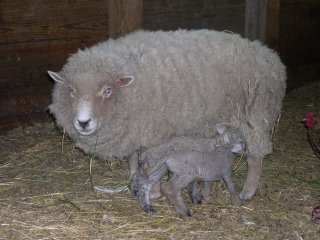
veral years, but each new birth in our mixed herd revives her mothering instincts. She's become the herd midwife, so to speak. She's present for the birth, helps clean up the babies, and helps deal with the afterbirth. She might even murmur encouragement throughout the long labor for all I know. Or those soft baas might be something less complimentary. Who knows? She's also a formidable protector, much to the dismay of the three farmcollies, who'd really like to lick the babies and stand guard over them, too. And the rest of the small herd? They hovered close, creating a 'safe zone' that no dog shall pass.
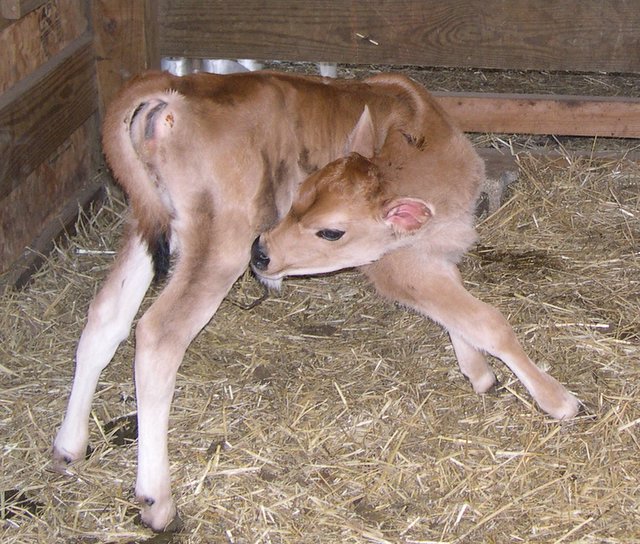
Most mothers know, however, that there comes a point when the well-meaning assistance and hovering become too much. So I shooed the rest of the herd into the pasture and shut the barn door. The dogs were ordered away as well, and I returned to my morning chores. Later in the day, when the usual newborn tasks had been attended to and the twins' bellies were full, I weighed them. Much to my surprise, their combined weight was 10 pounds. I expected less because neither looks as big as a half-grown kitten. Babydoll Southdown lambs are tiny when born, with ears that look too big for their gangly, fuzzy bodies. Their soft wool is usually coated with lanolin, so they look messy for the first week or so. These two have a bit of dirt rubbed into the lanolin as well since their mother chose to give birth in the dust near the pasture door instead of the deep straw further inside.


 Just down the road there's a patch of prairie, blooming with native flowers. It's owned by a friendly neighbor who doesn't mind me wandering about, snapping photos. About a week ago, the Indian Paintbrush hit it's prime, and its bright splashes of color dominated the field. This week, the yellows and blues are gradually taking over.
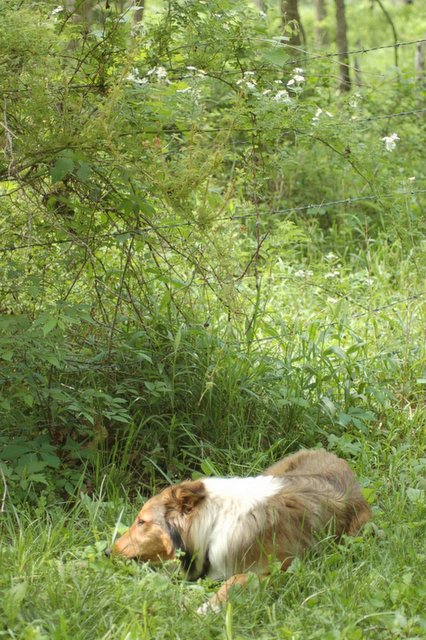 can't cover the nasty odor from Bebe's most recent skunk encounter. She tried rubbing it off in the grass, rolling in the straw, and rolling in the creek. Late yesterday afternoon she finally settled down to pout under this creekside patch of wild roses.
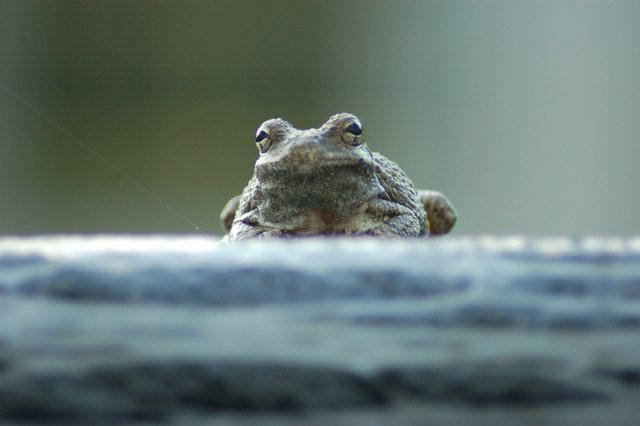
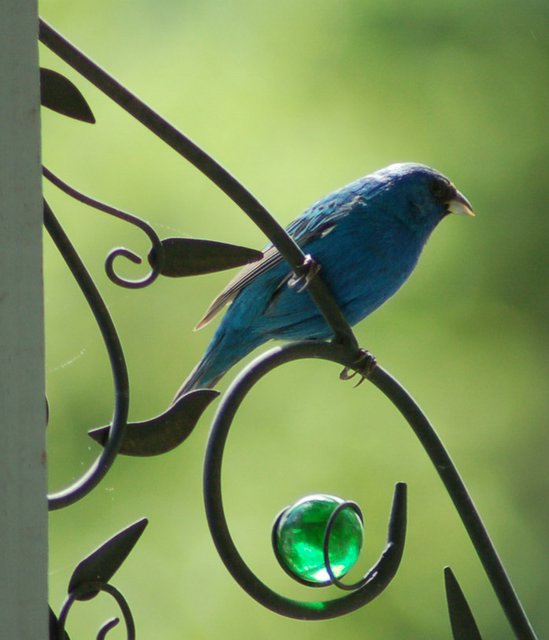 The hummingbirds and indigo buntings have returned to my terrace garden. The buntings perch on the end of a gutter to survey the area. Next stop is this bit of decorative ironwork. When they're sure it's safe, they proceed to the bird feeder for a meal. The hummingbirds aren't dining at our place yet because I haven't located all the parts to their feeder.

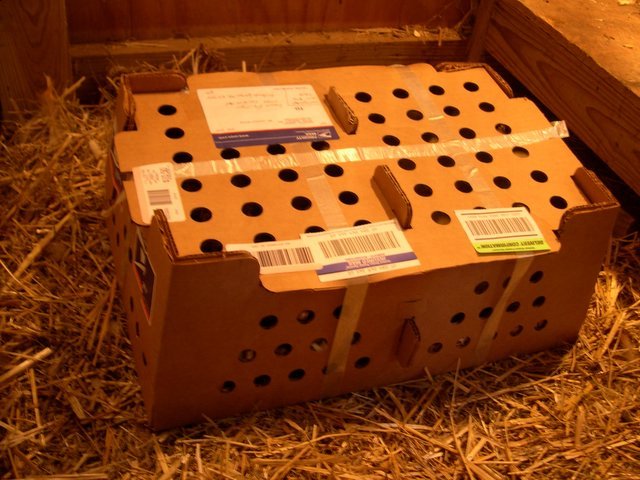 This morning I got the call as I was heading to the barn to milk the cow. My peeps had arrived at the local post office on the morning truck.
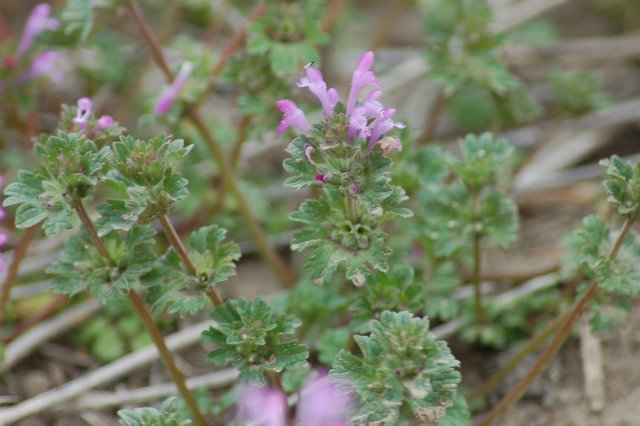
 Fields covered with large swaths of lavender-tinted flowers are a common sight in rural Missouri this time of year. Pretty weeds, that's all they are. Just henbit. You probably have a few here and there in your yard. They're not particularly noticible in small numbers.
  Several patches of wild strawberries are blooming in the back pasture. The majority grow among a couple of burnt-out blackberry patches the wildfires cleared this winter. They're also near the cedars, at the edge of a plum thicket, and scattered here and there among the grass. Judging from the number of buds on most plants, this will be a bumper crop year. Just the thought of that intense flavor makes my mouth water. If I'm really lucky and really fast, I might even beat the local wildlife to a few berries when they ripen.
  The answer to the surprise quiz picture: milking stanchion. (It was a surprise to me that I couldn’t upload the text.) My genius husband combined ideas from several designs and built this one, which suits me perfectly. Lottie Le Cow is less impressed but adjusting to the new stanchion, new stall, and new routine. We’d intended to leave the side open for easy feeding and cleanout. However, Wilbur Le Sheep hopped inside and christened it in a manner which feed boxes should not be christened. So my husband added the horizontal boards to prevent a repeat performance. The feed pans will still slide under the bottom slat, and now there’s a bonus feature – an escape ladder!